

Rotary Valves
Precision Air Lock & Feeding Systems
Oswar Rotocorp delivers high-performance rotary valves engineered for controlled discharge of bulk solids while maintaining airtight pressure separation between process zones. As a trusted rotary valve manufacturer in India, we provide reliable solutions for pneumatic conveying, dust collection, and industrial material transfer applications.
Our rotary airlock valve systems ensure smooth, continuous handling of powders, grains, and abrasive materials with minimal leakage and high operational efficiency. Designed for demanding industries, they are widely used in cement plants, power generation units, chemical processing, food production, and pharma manufacturing.
Built as advanced bulk material handling valves, these systems offer precise metering, strong sealing performance, and long service life for 24/7 continuous industrial operations.
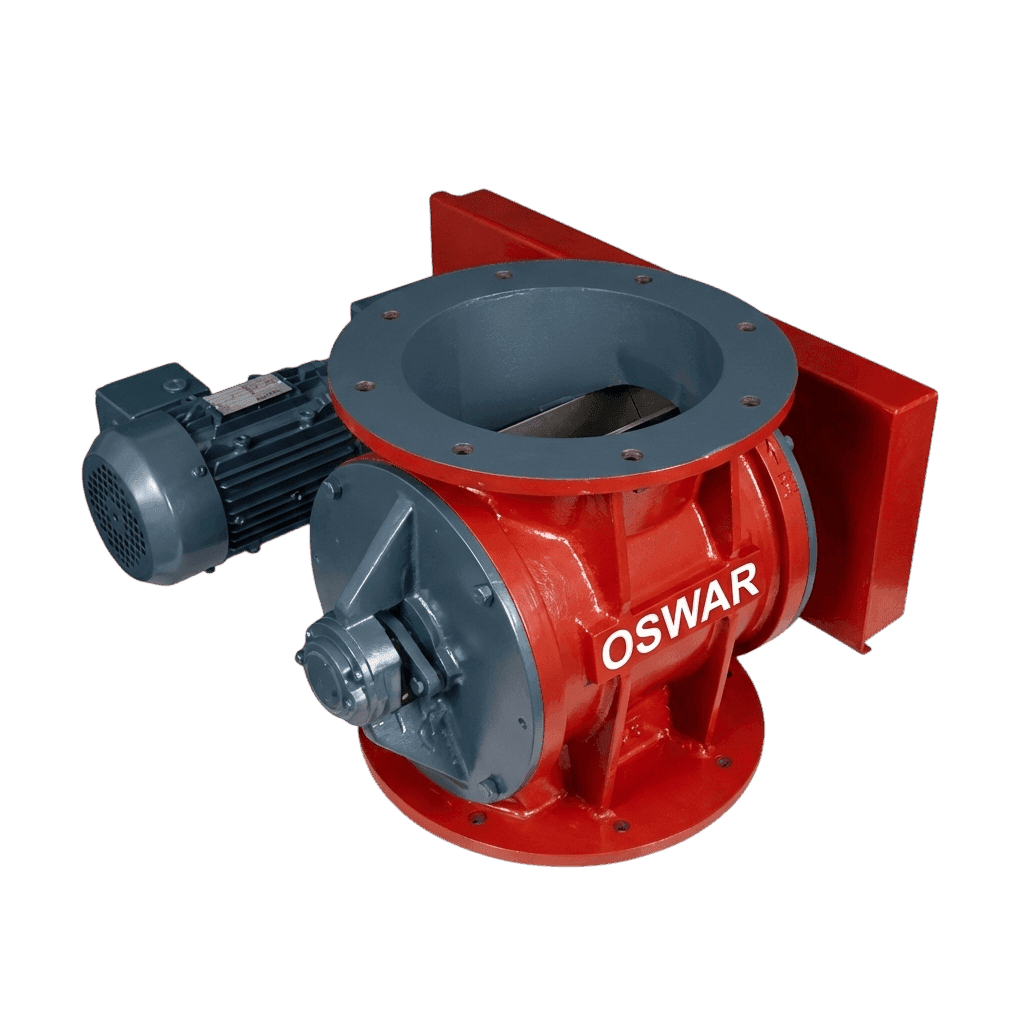
What Rotary Valves Do
- Pressure isolation between upstream and downstream zones
- Controlled volumetric discharge
- Leakage minimization
- Stable pneumatic conveying performance
- Process energy efficiency support
A Rotary Valve is not just a discharge device.
It is a pressure-control component that directly influences plant efficiency, emissions, and operational stability. At Oswar Rotocorp, every Rotary Valve is engineered to deliver:
- Long-term reliability
- Reduced leakage
- Stable feeding
- Lower maintenance cycles
- Consistent process performance
How a Rotary Valve Works
A rotary valve operates on a simple but highly precise continuous cycle designed for controlled discharge of bulk solids in industrial systems. Each rotation is divided into three key stages that repeat continuously, ensuring smooth material flow and consistent feeding performance.
Material Filling at Inlet
Bulk material from a hopper, silo, or filter flows by gravity into the open rotor pockets. Each pocket fills based on its volume and rotor speed, which together determine the discharge rate. The inlet design ensures uniform filling and prevents material bridging or clogging at the entry point.
Airlock Formation During Rotation
As the rotor turns inside the housing, multiple blades maintain close clearance with the body, creating a sealed zone between inlet and outlet. This is the critical airlock stage, where pressure is isolated between two process areas. The precision clearance between rotor tips and housing prevents backflow of air while allowing smooth rotation.
Controlled Material Discharge
When the filled pocket reaches the outlet, the material is released into the downstream conveying line or process equipment. The empty pocket then continues rotating back to the inlet to repeat the cycle. Rotor speed—often controlled via gear motor or VFD—regulates the feed rate from small flows to high-capacity industrial discharge.
Select Your Application
Each segment has dedicated engineering and recommended series matched to the specific operating conditions.
Powder Handling
Engineered for fine and dust-intensive materials requiring precision and clean operation.
Industries
Pharma | Food | Chemicals | Paints | Pigments | Glass | Ceramics
Recommended Series
Standard · Hygienic · Blow-Through · Abrasive
Bulk Material Handling
Designed for heavy, coarse, and abrasive materials operating in high-load environments.
Industries
Cement | Mining | Power | Steel | Lime
Recommended Series
Heavy Duty · Abrasive · High Temperature · Standard
Feeder Systems
Built for controlled, metered discharge to stabilize downstream processing.
Industries
Ethanol | Sugar | Fertilizer | Ceramics | Glass | Chemicals
Recommended Series
Standard · Heavy Duty · Blow-Through · Hygienic
Controlled Flow
Critical where pressure integrity and air sealing directly affect process performance.
Industries
Cement | Power | Steel | Chemicals | Mining
Recommended Series
Heavy Duty · High Temperature · Abrasive · Blow-Through
Rotary Valve vs Rotary Airlock Valve
A standard rotary valve is primarily designed for material metering and gravity-based discharge, where pressure difference between inlet and outlet is minimal. It is suitable for unpressurised systems where air sealing is not critical.
In contrast, a rotary airlock valve (Oswar Rotocorp) is engineered for both controlled material flow and gas-tight sealing. It is specifically designed for systems where maintaining pressure separation is essential, such as pneumatic conveying lines and dust filtration units.
| Parameter | Rotary Valve (Standard) | Rotary Airlock Valve (Oswar Rotocorp) |
|---|---|---|
| Function | Material discharge only | Material discharge + air sealing |
| Pressure Handling | Low / near atmospheric | Up to 0.5 bar standard, 1.0 bar heavy duty |
| Rotor Clearance | 0.3 – 0.8 mm (looser fit) | 0.10 – 0.25 mm (precision CNC fit) |
| Air Leakage | Higher | Minimal / controlled |
| Best Use Case | Gravity feeding systems | Pneumatic conveying, dust collectors |
| Industrial Use | Simple discharge systems | Cement, power, pharma, chemical, food industries |
6 Series. Every Duty.
From standard industrial duty to hygienic food-grade applications, each series is purpose-engineered for specific operating conditions.
Standard Series
Reliable performance for general industrial applications
Heavy Duty Series
Reinforced for high-load, high-volume discharge
High Temperature Series
Stability in elevated thermal conditions up to 450°C
Abrasive Series
Built for clinker, fly ash, limestone, and mineral powders
Hygienic Series
Stainless steel construction for food, pharma, and clean processes
Blow-Through Series
Optimized for pneumatic conveying where air and material pass simultaneously
Manufactured to Perform
Frequently Asked Questions
Quick answers to the most common questions about our rotary airlock valves, services, and ordering process.
Find the Right Rotary Valve
Share your material type, operating pressure, temperature, and application. Our engineers will recommend the right series and configuration.
